Capital at a Crossroads: Full Node Operation vs. Industrial Mining Farm for Long-Term Crypto Wealth
For US investors who have moved beyond simply purchasing Bitcoin on an exchange, the next question is often a deceptively complex one: how should serious capital be deployed within the Bitcoin ecosystem itself? Two distinct paths have emerged as the most discussed among the community — operating a full Bitcoin node on modest consumer hardware, or committing substantial resources to a professional mining operation. Each carries fundamentally different financial profiles, and conflating them is a common and costly mistake.
This analysis examines both approaches through the lens of generational wealth accumulation — not short-term speculation — using realistic cost structures relevant to the US market in 2024.
Defining the Two Paths
A full Bitcoin node validates every transaction and block against the protocol's consensus rules. It does not, by itself, generate Bitcoin. A Raspberry Pi 4 paired with a 2TB SSD, a modest router, and a reliable internet connection can serve this purpose for well under $500 in upfront hardware costs. Monthly electricity draw hovers around 5–10 watts — negligible against even the most expensive US residential utility rates.
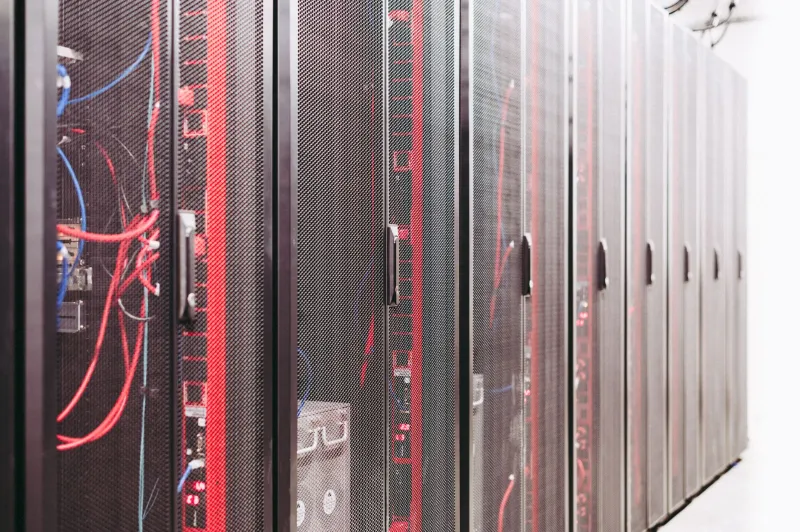
A mining farm, by contrast, is an income-generating enterprise. At the industrial entry point — roughly $50,000 in capital — an operator might field fifteen to twenty next-generation ASIC units, lease or own a dedicated facility with three-phase power access, and engage in active hash rate management. This is a business, not a hobby, and it demands to be evaluated as one.
The Node: Sovereignty Without Revenue
The financial case for running a full node is indirect but meaningful. By validating the chain independently, a node operator removes counterparty risk from their Bitcoin holdings. They are not relying on Coinbase, Binance, or any third-party service to tell them which chain is legitimate. In the event of a contentious fork or a network-level attack, a node operator retains autonomous authority over their own funds.
From a pure capital-return standpoint, however, the node generates nothing. The $500 invested in hardware does not compound. It does not produce yield. What it produces is optionality and security — attributes that are genuinely valuable but difficult to model in a spreadsheet.
For a US investor already holding a meaningful Bitcoin position, the node's value proposition is essentially that of insurance. The cost is minimal; the protection is structural. Framed this way, the node is not competing with the mining farm — it is a complementary tool for those who already hold Bitcoin and wish to interact with the network on sovereign terms.
The Mining Farm: A Capital-Intensive Business With Real Returns
A $50,000 mining deployment changes the conversation entirely. At current network difficulty and Bitcoin prices near $60,000–$65,000, a fleet of 15–18 Antminer S21 units (each delivering roughly 200 TH/s) could realistically generate between 0.008 and 0.012 BTC per day under favorable conditions — before accounting for costs.
And costs are where the model gets complicated.
Electricity is the dominant variable. US industrial power rates range from $0.04/kWh in states like Wyoming and Montana to $0.12/kWh or higher in California and New England. At $0.07/kWh — a reasonable national average for commercial accounts — a 15-unit ASIC farm consuming approximately 45 kW draws around $75 per day in electricity alone. At $0.10/kWh, that figure rises to $108 daily.
Hardware depreciation follows an aggressive curve. ASIC miners are purpose-built machines in a competitive, rapidly evolving hardware market. A unit purchased today for $3,000 may carry a market value of $1,200 within 18 months as next-generation hardware enters production. Operators who do not account for this in their financial models consistently overstate profitability.
Facility and maintenance costs — whether that means a commercial lease, cooling infrastructure, or on-site technician time — add another layer of overhead that solo operators frequently underestimate. A realistic all-in cost model should budget an additional $800–$1,500 per month for these line items at the $50,000 deployment scale.
Modeling a Five-Year Horizon
Assume a US investor allocates $50,000 to a mining operation in early 2024. Over a five-year horizon, accounting for the April 2024 halving (which reduced block rewards to 3.125 BTC), rising network difficulty, two hardware refresh cycles, and average electricity costs of $0.08/kWh, a conservative model suggests the operation could accumulate between 1.8 and 2.6 BTC net of all expenses — assuming Bitcoin price appreciation partially offsets declining block subsidies.
For comparison, that same $50,000 invested directly into Bitcoin at $60,000 per coin would yield approximately 0.833 BTC. If Bitcoin appreciates to $150,000 over five years — a scenario many analysts consider plausible — the direct purchase approach delivers a dollar-denominated gain of roughly $75,000 with zero operational complexity.
The mining farm's advantage lies in its potential to accumulate more Bitcoin than a direct purchase when hardware efficiency and power costs align favorably. Its disadvantage is the substantial execution risk: equipment failures, regulatory shifts in specific US states, rising difficulty, and power price volatility can all compress margins to zero or below.
Opportunity Cost: The Variable Most Investors Ignore
Perhaps the most overlooked factor in this comparison is opportunity cost. The $50,000 committed to mining hardware is illiquid the moment it is deployed. It cannot be repositioned into an altcoin opportunity, staked in a yield protocol, or withdrawn during a market downturn without incurring significant losses on equipment resale.
Direct Bitcoin ownership, by contrast, remains fully liquid on any major US exchange within minutes. For investors who value flexibility — particularly those managing diversified portfolios that extend beyond crypto — this liquidity premium is substantial.
Which Path Aligns With Generational Wealth?
The honest answer is that neither path is universally superior. They serve different investor profiles.
The full node is appropriate for any Bitcoin holder who values self-sovereignty and wishes to participate in the network's security infrastructure without taking on operational business risk. Its $500 cost is negligible relative to the protection it provides.
The mining farm is appropriate for investors who possess genuine operational expertise, access to sub-$0.07/kWh power, sufficient capital to weather hardware refresh cycles, and the risk tolerance of a small business owner. For this cohort, mining can accumulate Bitcoin at a cost basis below spot price — a meaningful long-term advantage.
For the majority of US investors who lack low-cost power access or operational infrastructure, direct Bitcoin acquisition combined with disciplined self-custody and a full validation node may represent the most reliable path to long-term, Bitcoin-denominated wealth — with significantly less execution risk.
At BitKarvm, we believe informed capital allocation begins with honest modeling, not marketing narratives. Whether you are evaluating mining hardware or refining your broader crypto strategy, the numbers must precede the commitment.