ASIC or GPU? How US Solo Miners Are Navigating the Hardware Divide to Find Profitable Alt-Coin Mining in 2024
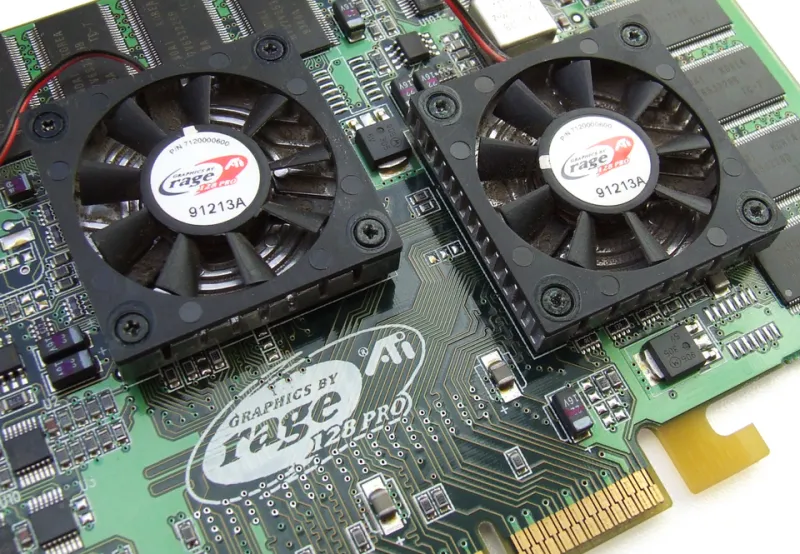
Photo: Trio3D, CC BY-SA 3.0, via Wikimedia Commons
For the independent miner operating out of a garage, a spare bedroom, or a small dedicated facility somewhere in the continental United States, the past three years have delivered a blunt message from the Bitcoin network: industrial capital has claimed this territory. Bitcoin's hash rate has climbed to record levels, dominated by publicly traded mining companies running tens of thousands of next-generation ASICs. Competing in that environment with a handful of Antminers is, for most individuals, an exercise in subsidizing someone else's block reward.
But the story does not end there. The broader mining landscape in 2024 offers genuinely viable alternatives — if you approach the decision with clear-eyed accounting rather than enthusiasm.
Why ASICs Locked Out the Solo Miner
Application-Specific Integrated Circuits are extraordinary pieces of engineering. A modern Bitcoin ASIC such as the Bitmain Antminer S21 Pro delivers hash rates that would have seemed implausible five years ago, at energy efficiencies that no GPU array can approach for SHA-256 computation. That efficiency is precisely the problem for independent operators.
When the most efficient hardware is also the most expensive, and when that hardware is purchased in bulk by institutions with access to cheap power contracts and capital markets, the network difficulty adjusts upward to reflect their collective hash rate. A solo miner adding a single ASIC unit to a network where competitors are adding thousands faces a probability of earning a block reward that is, statistically, negligible without pool participation — and even within a pool, the per-unit economics are thin.
The ASIC moat is real. Acknowledging it is the first step toward a smarter mining strategy.
The GPU Miner's Remaining Opportunity
GPUs are general-purpose compute devices. Their mining viability depends entirely on whether the target network uses an algorithm that resists ASIC optimization — either by design (ASIC-resistant algorithms) or by circumstance (networks too small to attract ASIC development investment).
Several networks in 2024 continue to reward GPU miners meaningfully. The three most relevant for US-based operators are Ethereum Classic, Monero, and a small cohort of emerging projects using novel proof-of-work algorithms.
Ethereum Classic (ETC)
Following Ethereum's transition to Proof of Stake in 2022, Ethereum Classic inherited a significant portion of displaced GPU miners and remains the largest GPU-mineable network by market capitalization. ETC uses the Etchash algorithm, a modified version of Ethash that was designed to remain GPU-friendly.
The practical reality in 2024 is that ETC's network difficulty has stabilized considerably since the post-Merge influx. For miners with efficient mid-range GPUs — NVIDIA RTX 3000 or 4000 series, AMD RX 6000 series — ETC remains one of the more predictable alt-coin mining targets. Price volatility is the primary risk variable, not hardware obsolescence.
Monero (XMR)
Monero occupies a unique position in the mining landscape. Its RandomX algorithm was specifically engineered to be CPU-friendly and ASIC-hostile, leveraging the branch-prediction and cache architecture of modern desktop processors. While GPUs can mine Monero, CPUs are genuinely competitive here — an unusual dynamic that opens the door for miners with high-core-count desktop or server processors.
Monero's mining community has historically been resistant to large-scale industrial mining, which has kept network difficulty more accessible to individual participants. For a US miner with an existing high-end workstation or a willingness to invest in a Ryzen Threadripper or EPYC platform, XMR presents a distinct risk profile from GPU-centric alt-coins.
Emerging Projects and Speculative Mining
A category of smaller-cap networks — including those using KawPow (RAVENCOIN's algorithm), Octopus, and newer proof-of-work designs — periodically offers outsized returns to early GPU miners before difficulty scales upward. This is speculative mining: the potential reward is higher, but so is the variance. Approaching it as a small allocation of total hash rate, rather than a primary strategy, is the prudent framework.
Building the Profitability Calculation: What Most Guides Get Wrong
Online mining calculators are useful starting points, but they consistently understate true costs. A rigorous profitability analysis for a US-based GPU miner in 2024 must account for the following variables:
Electricity Cost
The US average residential electricity rate sits around $0.16 per kilowatt-hour as of early 2024, but this varies dramatically by state. Texas, with its deregulated energy market, can offer rates below $0.08/kWh for consumers willing to manage time-of-use contracts. States in the Northeast frequently exceed $0.20/kWh. Your actual rate — not the national average — is the single most important input in your profitability model.
A six-GPU rig drawing 1,200 watts continuously consumes approximately 876 kWh per month. At $0.16/kWh, that is $140 in electricity alone. At $0.08/kWh, the same rig costs $70. The difference is the margin between profit and loss for many operations.
Hardware Depreciation
GPU prices have declined substantially from their 2021 peak, which is good news for new entrants. An RTX 3070 can now be acquired for $250–$300 on the secondary market. However, depreciation must be modeled realistically. Assume a useful mining lifespan of 24–36 months before resale value drops materially, and divide your hardware acquisition cost accordingly.
For a $300 GPU amortized over 30 months, that is $10 per month in depreciation — a non-trivial line item when monthly gross revenue per GPU on ETC might range from $8 to $20 depending on coin price.
Network Difficulty Trajectory
Difficulty is a dynamic variable. When a coin's price rises, more miners enter the network, difficulty increases, and per-unit revenue falls. Profitability calculators that use current difficulty for forward projections are systematically optimistic. A conservative model should apply a 5–15% monthly difficulty increase assumption for any network that has recently experienced price appreciation.
Sample Monthly Profitability Estimate (6-GPU ETC Rig)
| Variable | Conservative | Moderate | Optimistic |
|---|---|---|---|
| Electricity ($/mo) | $168 | $140 | $84 |
| Hardware Depreciation | $60 | $60 | $60 |
| Gross Revenue (ETC) | $90 | $120 | $180 |
| Net Profit/(Loss) | ($138) | ($80) | $36 |
This table illustrates the central truth of GPU mining in 2024: profitability is highly sensitive to electricity cost and coin price, and the margin for error is narrow. The operation described above is profitable only under the optimistic scenario, which requires both low electricity rates and favorable ETC pricing.
Is Building a New GPU Rig Worth It in 2024?
For miners in low-electricity-cost states — Texas, Wyoming, Kentucky, parts of the Pacific Northwest — building or expanding a GPU rig in 2024 can be viable, provided the following conditions are met:
- Hardware is acquired at secondary market prices, not retail MSRP.
- Electricity cost is at or below $0.10/kWh, ideally through a negotiated or time-of-use rate.
- The miner is willing to switch coins dynamically using profitability-switching software (such as NiceHash or custom scripts monitoring WhatToMine).
- The miner treats a portion of earned coins as a long-term hold, rather than immediately converting all revenue to USD — accepting price appreciation as part of the return profile.
For miners in high-cost electricity states, the arithmetic is unfavorable under most realistic scenarios. In those cases, cloud mining contracts or staking may offer better risk-adjusted returns than physical GPU infrastructure.
The Coin-Switching Advantage
One genuine advantage GPU miners hold over ASIC operators is flexibility. An ASIC mines one algorithm; a GPU rig can be redirected to dozens. Automated profit-switching — routing your hash rate to whichever GPU-mineable coin offers the highest real-time return — has become standard practice among serious independent miners. This dynamic allocation strategy partially offsets the per-coin difficulty risk by spreading exposure across multiple networks.
Final Guidance for the US Solo Miner
The era of profitable Bitcoin solo mining on consumer hardware is over for most US participants. That is not pessimism — it is an accurate reading of network economics. The opportunity that remains is real but requires precision: low electricity costs, disciplined hardware acquisition, and a willingness to engage with alt-coin networks on their own terms.
Ethereum Classic offers the most accessible entry point for GPU miners seeking a large, established network. Monero rewards CPU-centric operators with a uniquely ASIC-resistant design. Emerging projects offer speculative upside for miners comfortable with higher variance.
Approach every hardware investment as a capital allocation decision, not a hobby expense. Model your electricity costs honestly, depreciate your hardware conservatively, and treat coin-price assumptions with appropriate skepticism. That discipline — more than any single hardware choice — is what separates sustainable mining operations from costly experiments.